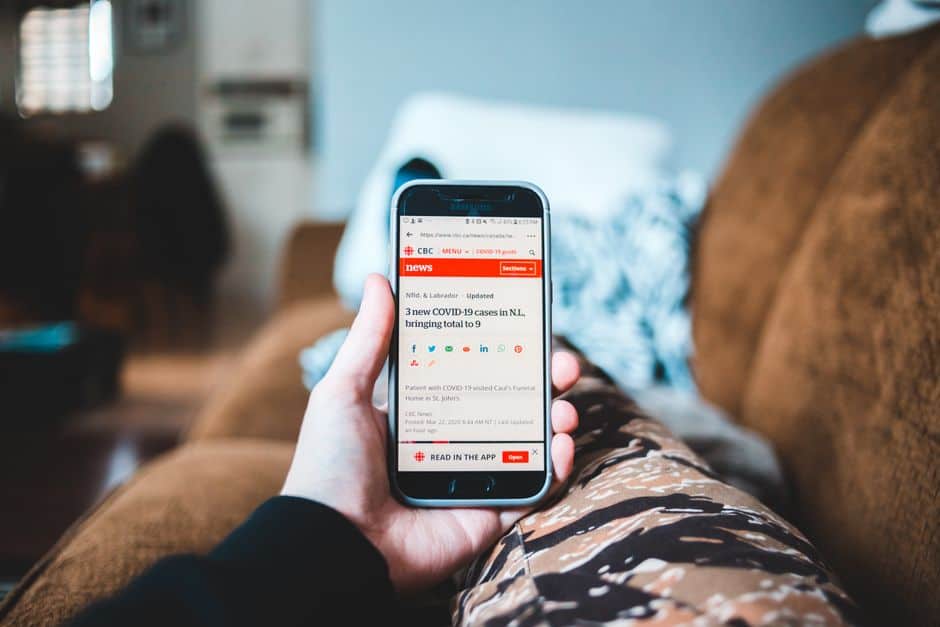
Across the world, more people are choosing to limit or completely stop consuming news. This shift—often called “news avoidance”—isn’t just a trend affecting big international outlets. It directly impacts local and specialist publishers too, including public-service communications teams and regional newsrooms that rely on community attention to keep people informed.
For a site like Waikato DHB Newsroom, the challenge is especially important: health information competes with a noisy media environment, and audiences can feel overwhelmed by risk-heavy headlines. Yet health updates are most useful when they reach people early—before misinformation spreads, before anxiety escalates, and before small issues become large ones.
This article explains what’s behind news avoidance, why it matters to local health communications, and how to design content that informs without exhausting readers. It includes practical, newsroom-ready techniques and real-world examples you can apply immediately.
What is news avoidance—and why is it accelerating?
News avoidance refers to deliberate reductions in news consumption, ranging from skipping certain topics to avoiding all news for periods of time. Unlike “being too busy,” avoidance is often a conscious self-protection strategy—people aren’t just distracted; they’re opting out.
Several forces are driving the increase:
- Emotional load: Continuous exposure to crisis language, conflict, and uncertainty creates fatigue.
- Low sense of agency: When stories feel unsolvable or repetitive, people disengage.
- Distrust and confusion: Conflicting headlines and shifting narratives can make audiences feel manipulated or left behind.
- Algorithmic overload: Social feeds reward outrage and speed, not clarity or usefulness.
One of the most important nuances: people may still care deeply about their community. Avoidance often reflects the format and feeling of news, not a lack of concern.
Why this matters for regional and health-sector communications
Local health news is inherently different from general breaking news: it can be highly practical (clinic hours, eligibility changes, service disruptions) and high-stakes (public health alerts, vaccination updates, infection prevention). If audiences disengage, the consequences are real—missed appointments, delayed care, reduced trust, and greater vulnerability to misinformation.
But health communication also has a unique advantage: it can be built around usefulness, specificity, and clear actions. In other words, local health news can become the antidote to the “doomscrolling” problem—if it’s designed intentionally.
What audiences say they want instead
In research and surveys across multiple countries, audiences commonly report they want news that helps them understand, not just react. They want fewer updates that rehash uncertainty and more information that answers: “What does this mean for me?” and “What can I do today?”
They also want more transparency about what is known, what’s unknown, and what’s being done. This isn’t about minimizing risk; it’s about reducing ambiguity and speculation.
A practical framing shift: from “latest” to “most useful”
Traditional newsroom instincts emphasize being first. But when audiences are fatigued, “most useful” often beats “most recent.” A local newsroom can differentiate by prioritizing:
- Stable explainers that get updated as guidance changes
- Service navigation content (where to go, who qualifies, how to book)
- Myth-busting tied to real questions people are asking locally
- Outcome-oriented updates (what changed, why it changed, what to do next)
How to write health-related updates without triggering avoidance
Below are newsroom-ready tactics that reduce cognitive load while keeping accuracy and authority. These techniques are particularly effective for public-facing health communications and community updates.
1) Put the “what to do” near the top
Many readers skim. If the action is buried, it won’t be seen. A strong structure is:
- 1–2 line summary: what changed and who it affects
- Action box (in text form): what to do, when, and where
- Short context: why this matters
- Details: eligibility, timing, links, and contacts
Example: If an after-hours clinic is changing operating times, state the new hours first, then explain the reason and what alternatives exist.
2) Replace abstract risk with concrete guidance
Risk-heavy language can be necessary, but it should be paired with specific steps. Compare:
- Less effective: “Cases are rising rapidly in the community.”
- More effective: “If you have symptoms, stay home and book a test; if you’re high-risk, contact your GP within 24 hours. Here’s how.”
Readers tolerate difficult information better when they can translate it into next actions.
3) Use “known / unknown / next update” transparency
Trust is strengthened when uncertainty is handled calmly and explicitly. A simple template:
- What we know: verified facts
- What we’re still confirming: gaps or pending information
- What happens next: when you’ll share another update
This is especially useful during service disruptions, outbreaks, or major policy changes.
4) Build “evergreen hubs” for recurring topics
News avoidance increases when people feel they must keep up with a fast-moving story to understand it. Evergreen hubs reduce that burden. Consider maintaining a single, regularly updated page for:
- How to access urgent and after-hours care in the Waikato region
- Vaccination eligibility, booking methods, and what to expect
- Mental health support pathways and crisis contacts
- Seasonal illness guidance (flu, RSV, gastro) with symptom checklists
Each update can point back to the hub, so readers don’t have to reassemble the story from scattered posts.
Real-world examples that translate well to local health news
Example A: “Service disruption” updates that reduce frustration
When services change—temporary closures, staffing constraints, longer wait times—audiences mainly want clarity and alternatives. The most effective updates usually include:
- What’s changed (in plain language)
- Who is most affected
- Alternative pathways (pharmacy, GP, after-hours, telehealth)
- When the situation will be reviewed
This avoids the common pitfall of announcing a problem without helping people navigate around it.
Example B: “Myth vs fact” posts grounded in local questions
Misinformation spreads fastest when it attaches to uncertainty. A targeted myth-buster works best when it answers a question you’re actually hearing in the community—via call centres, clinic staff, social media comments, or community partners.
Keep it tight:
- State the myth once
- Provide the correct information
- Explain why the myth is appealing or confusing (briefly)
- Offer a trusted next step: “If you’re unsure, contact…”
Example C: Data-driven updates without overwhelming charts
Audiences can value data while still feeling fatigued by constant numbers. A compromise is to include one or two key metrics paired with interpretation.
For example, instead of listing multiple rates, present:
- One trend: “Hospital admissions for respiratory illness increased over the last two weeks.”
- One implication: “Expect longer waits; use pharmacy-first options for mild symptoms.”
- One action: “High-risk people should check vaccination status and have a plan for early care.”
For broader context on major public-interest stories and global developments, many newsrooms also refer to wire services and international reporting standards. A useful reference point for how large outlets handle verification and updates is Reuters reporting standards and ongoing coverage, which can help local teams benchmark clarity and sourcing practices.
A simple editorial checklist to prevent fatigue (and increase trust)
Before publishing, run through this quick checklist:
- Is the headline specific? (Avoid vague urgency; include who/what/where.)
- Can a skimmer act in 10 seconds? (Put the key instruction near the top.)
- Did we separate facts from guidance? (Facts = what is; guidance = what to do.)
- Did we acknowledge uncertainty appropriately? (Known/unknown/next update.)
- Is the tone calm and respectful? (Inform, don’t alarm.)
- Is there a single best next step? (One phone number, one booking route, one hub page.)
Conclusion: Make “less but better” the new local advantage
News avoidance is a real and growing challenge, but it also creates an opening for local and specialist publishers to lead. When audiences are overwhelmed by constant updates and emotionally charged coverage, they respond to news that is clear, specific, and action-oriented.
For Waikato DHB Newsroom and similar public-service sites, the goal isn’t to publish more—it’s to publish in a way that helps people make decisions. Put actions first, keep context concise, be transparent about what’s known, and create evergreen hubs that reduce the “keeping up” burden. Done well, these choices don’t just retain readers—they rebuild trust through usefulness.