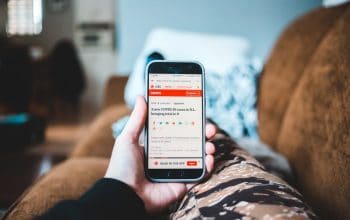
What is “emergency rumour control” and why is it suddenly a newsroom priority?
Emergency rumour control is the set of editorial practices used to detect, verify, contextualise, and clearly correct fast-moving misinformation during events like disease outbreaks, hospital incidents, major storms, water contamination notices, or civil defence emergencies. It has become a core capability because modern crises now unfold across social platforms, encrypted messaging apps, and livestreams before official statements reach the public.
In Aotearoa New Zealand, local newsrooms often serve as a trusted bridge between public agencies, clinicians, schools, whānau, and community groups. During health-related alerts in particular, rumours can directly change behaviour: people may avoid care, flood emergency departments, misuse medicines, or share personal data based on false claims. Rumour control is not “nice to have”; it is harm reduction.
How do rumours typically spread during health alerts (and what patterns should editors look for)?
Rumours spread along predictable paths. Recognising these patterns helps you intervene earlier and with more precision.
- Screenshot journalism: A cropped image of a “doctor’s note,” an internal email, or a lab result circulates without source context.
- Authority laundering: A claim is attributed to a hospital, a DHB, a clinician, or “someone who works in ED” to borrow credibility.
- False specificity: Precise but unverified details (e.g., “17 cases in Ward 4B”) sound convincing and travel faster.
- Cause-and-cure loops: Posts claim a single cause (“it’s in the water”) and a simple remedy (a supplement, a DIY test), creating a shareable narrative.
- Private-to-public escalation: Messages start in family chats or community groups, then get posted publicly once they “feel confirmed.”
Actionable tip: build a “rumour pattern checklist” into your daily conference during any ongoing alert. A five-minute scan for these patterns can prevent hours of downstream corrections.
What’s the fastest way to triage a breaking rumour without amplifying it?
The triage goal is to understand potential harm and verifiability before you publish anything. A reliable workflow looks like this:
- Log it: Capture the claim verbatim, time, platform, and any screenshots or links. Save in a shared verification channel.
- Classify harm: Does it prompt risky behaviour (e.g., delaying care), threaten privacy, or incite panic? High-harm claims get priority.
- Check provenance: Who first posted it? Is it an original source or a re-share? Look for earlier versions via platform search.
- Decide “quiet verify” vs “public debunk”: If it’s low reach and low harm, verify quietly. If it’s high harm or already widespread, prepare a clear public correction.
Practical newsroom guardrail: do not put the rumour in your headline. Use “What we know about…” and lead with verified facts. This reduces “myth familiarity,” where repetition increases perceived truth.
Which verification steps work best for health-related claims when time is limited?
Health rumours often involve medical terminology, institutional processes, or anonymised “insider” claims. Under deadline pressure, rely on structured checks:
- Two-source rule with role diversity: Confirm with one official source (public health unit, hospital comms, civil defence) and one subject-matter source (clinician, epidemiologist, pharmacist).
- Document reality check: If a screenshot claims to be an internal memo, ask for the full document and metadata; verify formatting conventions and distribution lists.
- Numbers sanity check: Compare any figures with expected baselines. If a claim implies a sudden spike, ask: would this trigger known escalation protocols?
- Clinical plausibility: Run the claim by a clinician: does the mechanism make sense? “Too neat” narratives are a red flag.
- Geographic and timeline consistency: Cross-check whether the timeline matches known reporting windows and lab turnaround times.
Data point you can apply: on major platforms, engagement can surge in minutes; treat the first hour as decisive. Establish a “60-minute verification sprint” routine with a designated editor who coordinates calls, logs evidence, and drafts a publishable “knowns/unknowns” explainer.
How should a newsroom work with hospitals or public agencies without becoming a mouthpiece?
Independence is essential, but crisis coverage benefits from predictable communication channels. You can be both rigorous and constructive by formalising how you engage:
- Pre-agree escalation contacts: Have an after-hours contact list (media team, public health duty officer, comms lead). Confirm update windows during an incident.
- Ask for process, not just statements: “What criteria would change the advice?” “What’s the testing throughput?” Process details make coverage more useful.
- Request “negative facts”: Ask what is not happening (e.g., “No change to ED triage,” “No evidence of waterborne spread”). This reduces ambiguity.
- Declare uncertainty: If officials cannot confirm yet, publish what’s pending verification and why (e.g., awaiting lab confirmation).
Editorial tip: keep a public “What we know / What we don’t know / What we’re checking” box updated through the day. This signals diligence and reduces speculation.
What language choices reduce panic while still being transparent?
Word choice can either de-escalate or inflame. During health alerts, clarity and proportionality matter:
- Avoid absolutes: Replace “safe/unsafe” with “no evidence of X at this time” and specify what is being monitored.
- Quantify risk when possible: If guidance is targeted (e.g., close contacts, certain symptoms), say who it applies to.
- Use action-first framing: Lead with what people should do: where to get advice, how to seek care, when to call emergency services.
- Separate anecdote from trend: A single case is not necessarily a pattern; label it clearly.
Practical phrasing that helps: “If you have these symptoms, do this.” Readers remember actions more than disclaimers.
How can newsrooms handle “leaked” screenshots, audio, or patient stories ethically?
Health crises generate highly shareable “insider” material, but the ethical and legal stakes are higher when patient privacy is involved.
- Assume identifiable harm until proven otherwise: Small details (location, time, condition) can re-identify individuals in tight-knit communities.
- Minimise and redact: If publication is in the public interest, remove names, NHI numbers, faces, and unique descriptors; avoid publishing full documents.
- Consent is not a checkbox: Confirm the subject understands how widely content may spread and that removal later may not be possible.
- Public interest test: Ask: does this reveal systemic risk or wrongdoing, or is it just sensational?
Actionable tip: create a rapid “privacy review” step for crisis content—one editor not involved in the chase reviews for identifiability and necessity.
What is the best format for a correction during an ongoing emergency?
Corrections work best when they are clear, findable, and repeated across the same channels where the rumour spread.
- Use a headline that leads with the fact: “Water supply remains safe to drink in [area], council says” rather than “No, the water isn’t poisoned.”
- State the claim briefly, then correct it: Keep the myth short; expand the explanation of the fact.
- Show your evidence: Link to official advisories, documents, or on-record expert quotes.
- Explain what changed: If earlier reporting was incomplete, name the update and time stamp it.
- Republish on social with consistent wording: Consistency reduces confusion and screenshot distortion.
Where possible, embed a short “How to verify this yourself” section (e.g., which hotline, where to find the advisory page, what the official alert level means).
How can a newsroom detect misinformation early without invading privacy?
Early detection does not require monitoring private messages. It relies on ethical signals:
- Listen to public community spaces: public Facebook pages, local forums, public Telegram channels, and comment threads.
- Track recurring keywords: Use platform search for specific place names + “outbreak,” “lockdown,” “contamination,” “sirens,” “hospital closed.”
- Create a tip pathway: Encourage readers to send rumours for checking via a dedicated email form or WhatsApp tip line with clear privacy terms.
- Build a “trusted network” list: community leaders, school principals, iwi communicators, and clinicians can flag emerging claims.
Operational tip: maintain a shared spreadsheet of circulating claims with columns for “status” (unverified/false/true/partly true), “harm level,” “evidence,” and “next check-in time.” This keeps the whole team aligned.
What role should AI play in rumour control (and what should it never do)?
AI can help with speed, but it should not be treated as an authority source. Useful applications include:
- Summarising long advisories into plain-language drafts (then human-checked).
- Transcribing interviews quickly for quote accuracy.
- Clustering tips to spot repeated claims across channels.
What AI should never do in a crisis context:
- Diagnose, estimate case numbers, or infer causes without verified data.
- Rewrite medical guidance in a way that changes meaning.
- Generate “likely scenarios” that could be mistaken for reporting.
Policy tip: adopt an internal rule that any AI-assisted text in an emergency must be reviewed by an editor for medical accuracy, tone, and clarity—and must be checked against primary sources.
Do we have evidence that misinformation meaningfully changes behaviour during crises?
Yes. Multiple studies and real-world events show that misleading health claims can affect uptake of protective behaviours, increase hostility toward frontline staff, and generate service demand spikes. Even when exact local impact is hard to quantify, newsroom experience during major events consistently shows that a single viral post can produce measurable outcomes: sudden queues at pharmacies, surges in call centre demand, or community-level avoidance of clinics.
For ongoing reporting and research coverage on misinformation and platform accountability, The Guardian’s reporting on misinformation can be a useful reference point for editors seeking wider context and international comparisons.
What are real-world examples of “high-risk” rumours a local newsroom should pre-bunk?
Pre-bunking means publishing accurate, practical information before a false claim takes off. In health and emergency contexts, consider pre-bunking:
- “The hospital is closed / ED is shutting”: Explain what service changes actually look like (e.g., redirecting some patients, not locking doors).
- “Ambulances won’t come”: Clarify priority categories and what to do while waiting.
- “A secret outbreak is being hidden”: Outline notification processes, reporting delays, and what “suspected vs confirmed” means.
- “A home remedy prevents infection”: Provide evidence-based guidance and when to seek professional advice.
Actionable tip: publish a standing “Emergency Health Explainers” hub (ED triage basics, testing timelines, isolation rules, where to get updates). During an event, that hub becomes your internal and public reference point.
How do you measure whether your rumour-control coverage is working?
Success metrics should reflect harm reduction and clarity, not just traffic.
- Correction reach: Did the correction post travel into the same groups where the rumour circulated?
- Engagement quality: Are comments asking practical questions instead of repeating the myth?
- Referral patterns: Are readers clicking through to official advisories and helplines?
- Community signals: Are frontline services reporting fewer rumour-driven calls over time?
Operational tip: after the event, run a short retrospective. Identify the top three rumours, how quickly you responded, what sources were fastest, and where your workflow bottlenecked.
Conclusion: What’s the simplest crisis-proof rumour-control playbook?
A crisis-proof rumour-control playbook is built on preparation, disciplined verification, and calm, action-first communication. In practice, that means: logging claims, prioritising by harm, verifying with diverse sources, avoiding amplification in headlines, correcting with evidence, and maintaining a transparent “knowns/unknowns” structure. When newsrooms treat rumour control as a standard operational function—like breaking news or court reporting—coverage becomes faster, safer, and more trusted when the community needs it most.
For Waikato audiences, the goal is not only to report what’s happening, but to help people make the next right decision: where to get care, how to protect whānau, and which sources to trust while an emergency evolves.