Why this comparison matters for modern newsrooms
When a major weather system hits, a water safety notice changes, or a hospital asks the public to take specific actions, the most important metric is no longer “how many people saw the story.” It’s “how many people received it in time to act.” For public-interest publishers like Waikato DHB Newsroom and other community-facing organisations, emergency communications sit at the intersection of news, public health, and infrastructure.
The challenge is that audiences don’t gather in one place anymore. Some people rely on live radio. Others get their updates from a WhatsApp group. Many won’t visit a website unless they’re already searching for something. And during emergencies, power, mobile networks, and attention can all be limited.
This comparison looks at three channels that increasingly define “last-mile” emergency news distribution in Aotearoa New Zealand and globally: SMS alerts, messaging apps (like WhatsApp), and radio. We’ll also include practical tips for combining them, using real-world patterns and actionable steps that any newsroom or public information team can implement.
Approach 1: SMS alerts (cell broadcast or targeted text)
What it is
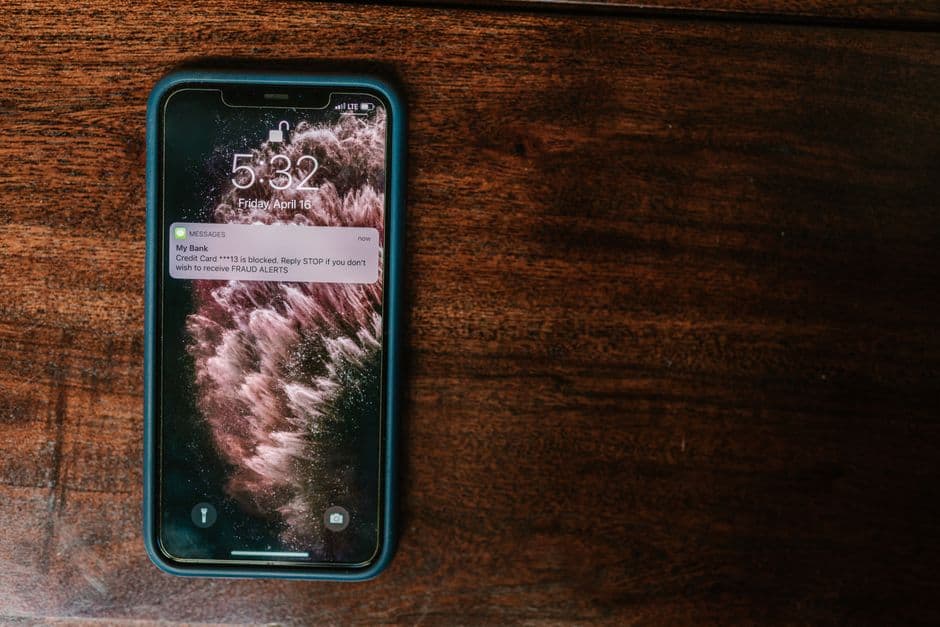
SMS alerts refer to messages delivered over mobile networks directly to phones. Depending on the system, alerts may be cell broadcast (sent to all devices connected to towers in a geographic area) or targeted SMS lists (sent to subscribed numbers).
Strengths
- Speed and reach: SMS is fast and works on nearly every phone, including older devices.
- Low effort for the public: People don’t need an app, account, or data plan to receive a basic text.
- High salience: A text message can cut through scrolling fatigue because it’s more “interruptive” than a social post.
- Works when data is congested: In some events, mobile data becomes slow while SMS still gets through.
Limitations
- Character limits: You must be concise and precise. Complex instructions can be difficult to convey.
- Opt-in friction (for list-based SMS): Building and maintaining a subscriber list takes time, consent management, and ongoing promotion.
- Language and accessibility: One-size messaging can miss multilingual audiences or those needing clearer formatting.
- Link dependency: Often you’ll add a URL for details—useful, but it assumes the user has connectivity and time.
Best-use scenarios
- Immediate safety actions (“Boil water now,” “Do not travel on X route,” “Seek urgent care if…”)
- Time-critical service changes (clinic closures, relocated services)
- Fast-moving weather or civil defence updates
Actionable tips for SMS that actually works
- Use a four-part structure: What’s happening + Who it affects + What to do + Where to find verified details.
- Write at “glance speed”: Aim for a message that can be understood in under 5 seconds.
- Use short, stable URLs: Prefer a permanent newsroom URL path that won’t break when shared.
- Pre-approve templates: Draft and legally/clinically review boilerplates for frequent scenarios (e.g., gastro outbreak advice, service relocation, heat safety).
Approach 2: WhatsApp (and similar messaging-app channels)
What it is
WhatsApp distribution typically takes three forms: broadcast lists (one-to-many), community groups (many-to-many), or Channels (one-to-many following model). Other regions use Telegram, Signal, WeChat, or Facebook Messenger, but WhatsApp remains a major tool in many communities for rapid sharing.
Strengths
- High engagement and forwarding: Messages are easily shared to family and community groups—useful for fast amplification.
- Richer formats: You can send longer text, bullet points, voice notes, PDFs, and images (without relying on a website click).
- Two-way correction: In managed settings, people can ask questions or flag confusion quickly.
- Micro-targeting by community: Different lists can serve different regions, languages, or service areas.
Limitations
- Misinformation risk: The same forwarding power that helps distribution can spread rumours rapidly.
- Moderation overhead: Groups require active management to prevent spam, anxiety spirals, and harmful claims.
- Discovery problem: People must opt in, and they need to know you exist and trust you.
- Privacy and compliance: Collecting numbers, handling consent, and storing contact data must be done carefully.
Best-use scenarios
- Ongoing multi-day incidents where updates evolve (e.g., flood response, service changes, travel advisories)
- Community-specific guidance (different advice for different towns, or tailored info for caregivers, schools, or kaumātua)
- Rumour control (“Here’s what’s true, here’s what’s not, here’s where to verify”)
Actionable tips for WhatsApp that builds trust
- Pin verification cues: Always include “Verified update as of [time/date]” and a consistent signature (e.g., “Waikato DHB Newsroom”).
- Adopt a moderation policy: Publish a short, plain-language policy (no medical advice in comments, no personal info, abusive content removed).
- Use a ‘myth vs fact’ format sparingly: Only address rumours that are already circulating widely; otherwise you can accidentally amplify them.
- Create shareable ‘action cards’: Short messages with 3–5 bullet points that community leaders can forward without editing.
Approach 3: Radio (AM/FM and streaming)
What it is
Radio remains one of the most resilient channels during emergencies. It includes traditional AM/FM broadcasts as well as streaming radio for those with data access. For many households, radio is the default during storms, power issues, and road closures—especially when driving.
Strengths
- Resilience: Battery-powered radios can work during power outages and when mobile networks are congested.
- Passive consumption: People can receive updates while driving, caring for others, or working—no need to read.
- Local trust: Local hosts and stations often have strong community credibility.
- Repeats matter: Radio naturally repeats key messages, increasing recall.
Limitations
- Not fully on-demand: Listeners may miss the exact moment an important detail is read.
- Harder to provide complex instructions: Addresses, phone numbers, and step-by-step advice can be difficult to retain without a visual reference.
- Coverage variability: Signal and station preferences vary by region.
Best-use scenarios
- Storms and infrastructure disruptions
- Transport incidents affecting drivers
- Situations requiring calm, repeated reassurance alongside practical direction
Actionable tips for radio-ready emergency news
- Write for the ear: Use short sentences, avoid jargon, and repeat the single most important instruction twice.
- Provide a memorable “next step”: A simple URL path (e.g., “waikatodhb.news/alerts”) or a short phone line reference.
- Establish pre-arranged protocols: Build relationships with local stations so urgent updates can be read quickly without back-and-forth.
Head-to-head comparison: speed, reliability, and trust
Speed to deliver
- Fastest: SMS and WhatsApp are typically immediate once triggered.
- Fast with caveats: Radio can be rapid if the newsroom has a direct line into local broadcast workflows.
Reliability in degraded conditions (power/network issues)
- Most resilient: Radio (especially battery-powered receivers).
- Often resilient: SMS may get through when data is slow.
- Most dependent: WhatsApp relies on smartphone data connectivity.
Trust and misinformation resistance
- Strong baseline trust: Radio and official SMS can feel more authoritative.
- Mixed: WhatsApp can be highly trusted within peer groups, but also a common route for rumours.
Ability to include nuance and context
- Best: WhatsApp (longer text, attachments, voice notes).
- Good: Radio (tone, explanation), but information may be missed without repetition.
- Limited: SMS (best for single-action directives with a link for details).
What high-performing emergency communication looks like: a layered model
Instead of choosing one channel, high-performing news operations layer channels in a deliberate sequence. A practical model is:
- Tier 1 (Immediate): SMS for “do this now” guidance.
- Tier 2 (Sustained): WhatsApp for ongoing updates, Q&A, and shareable summaries.
- Tier 3 (Resilience): Radio partnerships for repetition, reassurance, and reach during outages.
To make layering work, the messaging must stay consistent across channels. That means a single source of truth—usually a frequently updated newsroom page—and a disciplined approach to timestamps and versioning.
Practical newsroom workflow: reduce confusion, increase accuracy
1) Create a “one-page incident hub”
Maintain one URL that is updated frequently during an event. Every SMS and WhatsApp message should point to this hub for the latest details. Keep it lightweight and readable on mobile.
2) Standardise timestamps and “valid as of” language
Time ambiguity fuels misinformation. Use consistent phrasing like “Update valid as of 3:15pm, 31 Oct” across channels.
3) Pre-build message templates with clinical and comms sign-off
In health contexts, small wording changes matter. Templates can prevent delays and reduce risk. Common templates include boil-water notices, vaccination clinic changes, infection prevention reminders, and visiting restrictions.
4) Decide in advance what you will not publish
In emergencies, audiences ask for details that may be private, unverified, or harmful (e.g., patient identities, exact locations when it could endanger someone, unconfirmed casualty reports). Set rules before the incident, not during it.
Data point to keep in mind: attention is a scarce resource
A growing body of media research shows that audiences are overwhelmed by updates during major events. In practice, this means clarity beats volume. Your goal is not to publish the most messages—it’s to publish the most actionable messages, repeatedly, in places people already are.
For broader context on how news consumption habits and attention patterns shift during big events, the media analysis and reporting hosted by The New York Times can be a useful starting point when benchmarking approaches and language styles used in large-scale breaking news coverage.
Which channel is “best”?
It depends on your objective:
- If you need immediate action: SMS is often the strongest first strike.
- If you need community distribution and dialogue: WhatsApp can outperform, provided moderation and verification are strong.
- If infrastructure is fragile or you need repetition: Radio remains unmatched for resilience and passive reach.
In most real scenarios, the best answer is a coordinated mix: SMS to trigger awareness, WhatsApp to sustain and clarify, and radio to reinforce and reach people when screens fail.
Conclusion: Build a multi-channel emergency news plan before the emergency
Emergency communication is not a “set and forget” publishing task. It’s a system: templates, approval flows, distribution channels, and community partners working together under time pressure. SMS, WhatsApp, and radio each solve different problems—speed, richness, and resilience—and the strongest strategy uses them as complementary tools rather than competitors.
For Waikato communities, the most practical next step is to audit your current distribution: identify your fastest channel, your most resilient channel, and your most engaging channel. Then build a simple playbook that defines: who drafts, who approves, where the single source-of-truth lives, and how updates get repeated without drifting from verified facts.